Disclosure: digitalmatters.me has covered both products extensively in recent weeks. This piece is a neutral comparison and does not reflect a vendor relationship with either Anthropic or OpenAI.
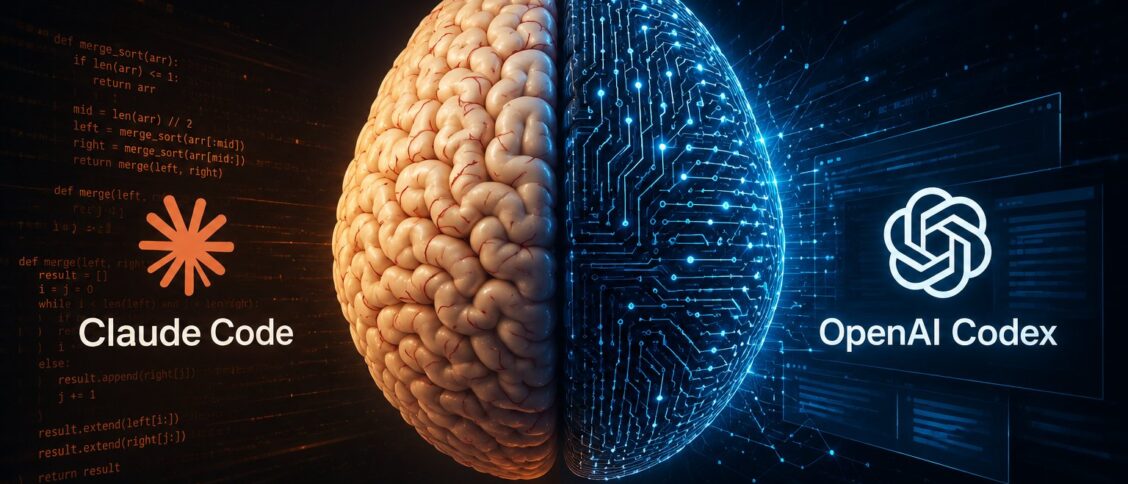
Claude Code vs OpenAI Codex is the comparison the AI-coding-agent market spent the last twelve months waiting for. As of mid-May 2026 both products ship comparable feature surfaces: long-running autonomous coding work, mobile control surfaces for remote supervision, enterprise compliance gates that make security teams comfortable, and tight integration with each vendor’s flagship chat assistant. The differences are real, but they’re now narrower than the marketing pages suggest.
This post walks through where the two products meaningfully differ as of mid-2026: the platform interfaces each one ships, the pricing structures (which are different enough that direct list-price comparison misses the real cost picture), the model layer underneath each agent, the enterprise compliance posture, and the mobile control surfaces both products now ship. For background on the underlying agents, see our pieces on what AI agents are and OpenAI Codex’s mobile launch.
Claude Code vs OpenAI Codex at a glance
Claude Code is Anthropic’s autonomous coding agent. It reads an entire codebase, writes code across multiple files, runs terminal commands, and commits changes to git. It runs as a CLI tool, a VS Code extension, a desktop app, and (more recently) a web app. Underneath, it uses Anthropic’s frontier models in the Claude Sonnet 4.6 and Claude Opus 4.7 tiers.
OpenAI Codex is OpenAI’s autonomous coding agent. The branding ties back to the original 2021 Codex model, but the current product is a contemporary agent harness that wraps OpenAI’s frontier models (GPT-4.1, GPT-5, GPT-5 Chat, GPT-5.5, GPT-5.5 Thinking) and ships as a desktop app, a Chrome extension (early May 2026), a remote SSH-connected runtime, and most recently a mobile control surface inside the ChatGPT app (May 14, 2026).
The structural symmetry is striking. Both products: run as autonomous agents that complete work over minutes to hours rather than turn-by-turn; supervise via approval prompts that the developer can answer from a phone; integrate enterprise compliance gates (SSH, audit, governance, healthcare-grade workspaces); and live inside the same product as the vendor’s main consumer chat product. The market has converged on a shared shape.
Where each one lives: platforms and interfaces
Claude Code surfaces as of mid-2026:
- CLI tool (`claude` command in the terminal): the original interface, still the canonical way to use Claude Code on a development machine.
- VS Code extension: in-editor integration with file-aware context.
- Desktop app: native macOS and Windows app with Anthropic Cowork access on the desktop tier (Cowork is Anthropic’s non-coding agentic-task surface for tasks like file management and research).
- Web app: browser-based access for users who don’t want a local install.
- Remote Control (mobile): iOS and Android control surface released February 2026. Supervise long-running Claude Code work from a phone; approve actions; switch tasks.
OpenAI Codex surfaces as of mid-2026:
- Desktop app (macOS shipping; Windows “coming soon” as of May 14): the primary runtime.
- Chrome extension (early May 2026): the agent operates inside live browser sessions.
- Background mode (April 16, 2026): Codex runs autonomously in the background on the desktop.
- Remote SSH (GA May 14, 2026): connects into approved remote dev environments with company dependencies, credentials, security policies, and compute resources already configured.
- ChatGPT mobile app integration (preview, May 14, 2026): remote viewer/approval surface inside the ChatGPT iOS and Android app; available across all ChatGPT plans including Free and Go.
The surface counts are close. The meaningful difference: Claude Code ships a real native VS Code extension as a first-party product; OpenAI’s editor integration story relies on third-party extensions and the desktop app. For teams whose existing developer workflow centers on VS Code, that’s a non-trivial preference signal.
Pricing structures compared
The two products price differently enough that a tier-by-tier comparison would be misleading. The right comparison is by usage pattern.
Claude Code is included in Anthropic’s individual Pro plan ($20/month), Max 5× (five times the Pro usage allowance), and Max 20× (twenty times the allowance), per Anthropic’s published plans page. On the business side, Team Standard at $20/seat does NOT include Claude Code; Team Premium at $100/seat with a 5-seat minimum is the lowest tier that does include it. Enterprise pricing is sales-led and per Anthropic’s published deployment benchmarks averages $13 per developer per active day, with 90% of users below $30 per active day. A 10-engineer team using Claude Code daily runs $150–$250 per developer per month at typical usage. Beginning June 15, 2026, Anthropic separates programmatic Claude usage from chat subscription limits with a dedicated monthly credit system (InfoWorld): $20 in credits on Pro, $100 on Max 5×, $200 on Max 20×.
OpenAI Codex is included in every ChatGPT plan: Free, Go, Plus ($20/month), Pro ($200/month), Team ($25–30/seat), Business ($30/seat), Edu, and Enterprise. The April 2, 2026 pricing update moved Codex from per-message to API-token billing, applicable to new and existing Plus/Pro/Business plans plus new Enterprise plans. Through May 31, 2026, Pro subscribers get 2× Codex usage as a launch promotion (10× the standard 5× rate). Plus and Pro users who hit usage limits can purchase additional credits; Business, Edu, and Enterprise can purchase workspace credits. The Codex pricing page on developers.openai.com is the canonical reference.
The takeaway: Claude Code’s pricing model assumes the customer is a serious daily user; Pro at $20/month is the entry point but Max 5× ($100/month equivalent) is the realistic tier for most professional developers. OpenAI Codex spreads more broadly across the ChatGPT plan tiers, including free-tier access, which materially lowers the threshold for casual or trial use. For organizations buying for a developer team, the comparison flips: Anthropic’s Team Premium at $100/seat (5-seat minimum, $500/month floor) versus OpenAI’s Business at $30/seat ($150/month floor for a 5-seat team). At those tiers OpenAI is the lower published price, but token-billing means actual cost scales with usage in ways the seat price doesn’t capture.
The model layer underneath each agent
Claude Code runs on Claude Sonnet 4.6 and Claude Opus 4.7. Opus 4.7 is the more capable model and the higher-cost choice; Sonnet 4.6 is the faster, cheaper default. Anthropic’s pattern is to make model selection part of the user experience rather than a configuration choice; the agent picks based on the task and the user’s plan.
OpenAI Codex runs across GPT-4.1, GPT-5, GPT-5 Chat, GPT-5.5, and GPT-5.5 Thinking (the reasoning variant launched April 23, 2026, covered in our GPT-5.5 piece). Per-prompt model selection (shipped February 2026 in Copilot Studio and now standard across OpenAI’s agent products) lets users mix models within a single Codex session.
In practice, both products are at the current frontier for autonomous coding work. Independent benchmarks (SWE-bench, MultiSWE-Bench, HumanEval+) trade places between Anthropic and OpenAI on a quarterly basis as new model versions ship. As of May 2026, Claude Opus 4.7 leads on long-context refactor work; GPT-5.5 Thinking leads on multi-step planning and tool use; the gap on routine coding tasks is small. Neither product’s model layer is a structural disadvantage in 2026; both are credible production choices.
Enterprise posture and compliance
OpenAI’s enterprise gates landed in a single packaged set on May 14, 2026: Remote SSH GA (approved remote dev environments with company dependencies and credentials), Hooks GA (programmatic policy enforcement at the agent loop), programmatic access tokens for Business and Enterprise plans (Codex in CI pipelines), and HIPAA-compliant Codex for eligible ChatGPT Enterprise workspaces in local environments. This is the "we’re ready for regulated industries" gating set.
Anthropic’s enterprise gates have shipped more gradually. Claude Enterprise has data residency, SSO/SCIM, and audit logging. Claude Code inherits the Enterprise plan’s posture. The dedicated SSH-based remote-dev pattern OpenAI shipped May 14 is not yet matched by an equivalent first-party Claude Code product, though Anthropic’s partner ecosystem (CodeSandbox, GitHub Codespaces) covers similar use cases for many customers.
For organizations whose security or compliance team has a hard list of requirements (HIPAA, FedRAMP-aspirant, formal audit posture), OpenAI’s May 14 packaging is currently easier to procure against. For organizations whose posture is "we want strong enterprise hygiene but don’t have a specific compliance gating list," either platform is defensible.
Mobile control and remote operation
Both products now ship mobile control surfaces. Anthropic’s Remote Control for Claude Code launched February 2026; OpenAI’s Codex mobile launched May 14, 2026. The capability set is structurally similar: monitor agent work from a phone, approve actions, switch threads, kick off new tasks. Codex itself stays on the developer machine; the phone is the supervision surface.
The pricing on the mobile surface differs. OpenAI made the mobile preview available across every ChatGPT plan including Free and Go, which removes the price floor entirely; anyone with a ChatGPT account can supervise Codex from a phone. Anthropic’s Remote Control requires a Claude Code plan (Pro, Max, Team Premium, or Enterprise). For casual or evaluation usage, OpenAI’s pricing posture wins by a noticeable margin. For professional daily use, both are within the cost envelope that a single seat already justifies.
The Windows-mobile caveat: OpenAI’s mobile preview connects only to a Mac running the Codex desktop app. Windows support is "coming soon" but had no date as of May 14. Anthropic’s Remote Control works against Claude Code on Windows, macOS, and Linux out of the gate. For Windows-developer organizations, that’s a current operational gap on the OpenAI side.
Who should pick which
Pick Claude Code if: your team’s editor is VS Code and you value the first-party extension; you want a single platform across coding (Claude Code) and non-coding agentic work (Cowork on the desktop); your developers run on a mix of macOS, Windows, and Linux and you need mobile supervision today; your evaluation prioritizes Opus-tier long-context refactor work; or your organization is already invested in Claude through the API for non-coding use.
Pick OpenAI Codex if: your team is already on ChatGPT Plus, Pro, Team, Business, or Enterprise for the chat product and want the agent at no marginal license cost; the May 14 enterprise package (Remote SSH, Hooks, programmatic tokens, HIPAA-eligible workspaces) matches your compliance gating list; you want the broadest free/low-tier evaluation surface (Codex on the mobile preview is available even on the ChatGPT Free plan); or your developers are on Macs and Windows support isn’t a blocker yet.
Run both if your team is large enough that a per-developer preference becomes a real productivity question. Per-prompt model selection now exists on both sides; teams that run both products in parallel report meaningful productivity gains by routing tasks to whichever agent currently handles a given pattern best. The lock-in question is genuinely small; switching is easier than the marketing copy on either side implies.
For broader context on how AI agents fit into business workflows, our AI Agents practitioner’s guide covers the underlying capability shift; our Microsoft Copilot Studio recap covers the third major coding-agent platform that buyers often consider alongside these two.
Frequently Asked Questions
Is Claude Code or OpenAI Codex cheaper for an individual developer?
At the entry tier, OpenAI Codex is technically cheaper: it’s included in ChatGPT Plus at $20/month, ChatGPT Free, and ChatGPT Go. Claude Code is also included in Anthropic Pro at $20/month. For casual or evaluation use, the prices are comparable. For serious daily use, both products effectively push users to higher tiers (Max 5× for Claude, Pro $200 for ChatGPT) where the costs diverge based on token usage patterns. The honest comparison requires modeling your actual daily token consumption rather than comparing list prices.
Which one has better mobile support in mid-2026?
Both ship comparable mobile control surfaces. Anthropic’s Remote Control for Claude Code (February 2026) works against Windows, macOS, and Linux desktop installations. OpenAI’s Codex mobile (May 14, 2026, preview) currently connects only to a Mac. For mixed-OS developer teams, Claude Code has the broader OS coverage as of May 2026. For Mac-only teams, both work.
Can I use both Claude Code and OpenAI Codex on the same machine?
Yes. The two products run as separate processes with separate model APIs. Many teams that have run head-to-head evaluations report keeping both installed and routing tasks based on which agent handles the specific work pattern best. Per-prompt model selection is available on both sides, so a developer can deliberately pick the model for a given task within whichever agent they prefer for that workflow.
Which one has the better enterprise compliance posture?
As of May 14, 2026, OpenAI’s enterprise package is more recently shipped and easier to procure against a hard compliance checklist (Remote SSH, Hooks, programmatic tokens, HIPAA-compliant workspaces all landed together). Anthropic’s Claude Enterprise has been generally available longer and covers data residency, SSO/SCIM, and audit logging, with partner-ecosystem coverage for SSH-based remote dev. For HIPAA specifically, OpenAI is the more recently public option as of mid-May 2026.
What about Microsoft’s coding agents (GitHub Copilot, Copilot Studio agents)?
This piece focuses o