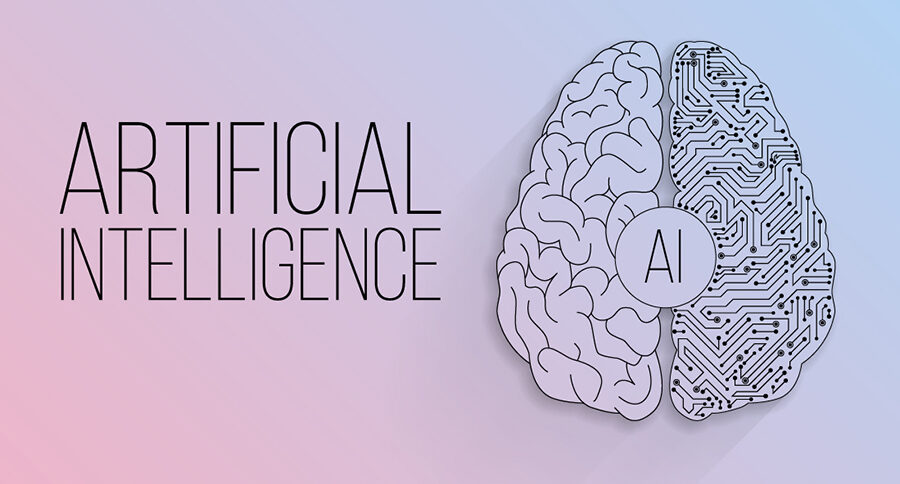
What is artificial intelligence? Artificial intelligence is the broad field of computer systems that perform tasks typically associated with human intelligence: understanding language, recognizing images, making predictions from data, reasoning over knowledge, and generating new content. Within that umbrella sit several distinct technical approaches (machine learning, deep learning, natural language processing, computer vision, and others) that produce different kinds of capability. Businesses encounter AI most often through specific applications: search engines, recommendation systems, fraud detection, chatbots, image and code generation, predictive analytics.
For a business operator trying to make sense of AI in 2022, the practical questions are not "what is AI" in the abstract but "which kinds of AI matter for my work, what can they actually do, and where are the limits." This post answers those. We cover the main types of AI you will encounter, the real-world applications driving the current wave, what businesses are doing with it, and what remains genuinely hard. Companion posts cover specific topics in depth: Natural Language Processing 101 for NLP specifically, and additional pieces in our AI coverage.
What artificial intelligence actually is
Artificial intelligence as a field traces to the 1950s. The term was coined at the 1956 Dartmouth workshop, which gathered the researchers who would shape the discipline for decades. The early decades produced symbolic AI (rule-based systems, expert systems, logical reasoning programs) and saw cycles of enthusiasm and disappointment. The current wave of AI capability, which began in the 2010s and accelerated dramatically in the 2020s, is built primarily on machine learning rather than symbolic methods.
The most useful distinction for a business operator:
- Narrow AI: systems designed to do one specific task very well. The Google search algorithm, the Netflix recommendation engine, a fraud detection model at a bank, the speech recognition in a voice assistant. Every commercial AI application today is narrow AI. It is excellent at its target task and useless at unrelated tasks.
- General AI (AGI): a hypothetical system that could perform any intellectual task a human can, learning and generalizing across domains. AGI does not exist as of 2022. Whether and when it will exist is the subject of significant debate among researchers; predictions range from “within decades” to “not in this century.”
For practical purposes, "AI" in business contexts means narrow AI applied to specific problems. The marketing of AI products sometimes blurs this distinction, suggesting that the AI system "thinks" or "understands" in a general sense. It does not. It performs the specific task it was trained to perform. Keeping that distinction in mind makes evaluating AI claims more straightforward.
The main types of AI you will encounter
Several technical approaches sit under the AI umbrella. The ones a business operator runs into most often:
- Machine learning (ML): the dominant approach in modern AI. Systems learn patterns from data rather than being explicitly programmed with rules. Fraud detection models, recommendation engines, and the bulk of predictive analytics tools are machine learning applications.
- Deep learning: a subset of machine learning using neural networks with many layers. Most of the recent AI capability leaps (image generation, language models, voice synthesis) are deep learning applications. The technique is what made the current AI wave possible.
- Natural language processing (NLP): the discipline of getting computers to work with human language. Chatbots, translation, sentiment analysis, search ranking, and summarization are NLP applications. Our NLP 101 piece covers this depth.
- Computer vision: getting computers to interpret images and video. Face recognition, medical imaging analysis, autonomous vehicle perception, content moderation, and quality inspection on production lines are computer vision applications.
- Generative AI: AI that produces new content (images, text, audio, code) rather than just classifying or predicting. DALL-E 2 (text-to-image, released April 2022), Midjourney (released March 2022), and similar tools are generative AI applications.
These categories overlap. A modern chatbot uses NLP built on deep learning trained with machine learning techniques. The labels are more about the application area than about distinct technologies.
Real-world AI applications in mid-2022
The AI you actually encounter on a typical day, often without noticing:
- Search engines: Google’s ranking algorithms use multiple AI systems, including BERT (a language model) and RankBrain (a learning-to-rank system). The search result you click is shaped by these systems.
- Recommendation systems: Netflix’s “what to watch next,” Spotify’s Discover Weekly, YouTube’s recommended videos, Amazon’s “customers who bought this” all use AI to predict what you will engage with.
- Image generation: DALL-E 2 (OpenAI, public beta April 2022), Midjourney (March 2022), and the upcoming Stable Diffusion (August 2022) let users generate images from text descriptions. The technology has moved from research curiosity to mainstream tool within a year.
- Code completion: GitHub Copilot (June 2022 GA, built on OpenAI Codex) generates code suggestions inline as developers type. Significant productivity gains documented across early adopters.
- Translation: Google Translate, DeepL, Microsoft Translator all use neural machine translation that has dramatically improved over the past decade.
- Voice assistants: Siri, Alexa, Google Assistant, Cortana use speech recognition (input) and text-to-speech (output) plus NLP for the conversational layer.
- Customer service chatbots: deployed across consumer-facing companies for first-line support. Quality varies dramatically; the gap between a well-trained chatbot and a poorly-deployed one is enormous.
- Medical imaging: AI systems read radiology images (X-rays, CT scans, MRIs), retinal scans, and other diagnostic imagery. The FDA has approved hundreds of AI-enabled medical devices.
- Fraud detection: every major payment processor, bank, and financial services company runs AI fraud models on transactions. The “your card was declined for suspicious activity” experience is an AI decision.
The pattern across these applications: AI works well when there is a clearly-defined task, substantial training data, and a tolerance for occasional errors that can be caught downstream. AI works less well when the task is novel, data is scarce, or errors are catastrophic. The Stanford AI Index annual report is the most comprehensive public dataset on AI adoption, capability progress, and economic impact across these applications.
How businesses are using AI in mid-2022
Beyond the consumer-facing examples, several business application patterns have become common:
- Customer service automation: chatbots handling first-line support, AI-driven email response routing, automated FAQ matching. Reduces support cost; quality depends heavily on implementation.
- Marketing personalization: AI-driven email content, product recommendations, dynamic website content, audience segmentation. The intersection with marketing automation platforms drives much of the current B2B adoption.
- Predictive analytics: forecasting sales, predicting customer churn, anticipating equipment failures (predictive maintenance), demand forecasting in supply chain.
- Process automation: extracting data from invoices and contracts, classifying documents, automating data entry workflows. Combines AI (the classification and extraction) with traditional automation (the workflow execution).
- HR and recruiting: resume screening, interview scheduling, employee sentiment analysis. Use with caution; algorithmic bias in hiring AI has been a recurring concern.
- Content creation assistance: AI-assisted writing tools, image generation for marketing assets, code generation. Early days but accelerating quickly.
The businesses extracting the most value from AI are those treating it as a specific tool for specific problems rather than as a strategic transformation. "We will become an AI-first company" rarely produces measurable results; "we will use AI to reduce customer support response time by 40%" usually does.
What is still hard for AI in 2022
A balanced view of AI requires honesty about its limits. Specific capabilities that remain genuinely hard:
- Common-sense reasoning: AI systems lack the everyday physical and social common sense that humans absorb in early childhood. A language model can write fluently about cooking but doesn’t know that water is wet or that putting a cup near a table edge is risky.
- Truly novel creativity: generative AI produces outputs by recombining patterns from training data. It can produce variations and combinations that no human would invent, but it cannot create entirely new forms or styles from scratch in the way human innovators do.
- Context across long conversations: current language models have a limited window of context they can hold at once. Conversations that require remembering details from earlier in the exchange break down past the context limit.
- Multi-step reasoning under uncertainty: AI systems are often confidently wrong on problems that require chaining several inferences together, especially when each step has uncertainty.
- Causal reasoning: AI excels at correlations in data; it struggles with causation. “Sales rise when this ad runs” is a correlation; “this ad causes those sales” requires evidence the model cannot infer from observational data alone.
These limits are research frontiers. They will move as AI systems improve. They are also why the gap between AI demos and AI in production is often substantial; demos showcase the strengths, production reveals the gaps.
Update (2026-05-12): how AI has evolved since this post first published.
The fundamentals in the body of this post still hold. What has changed since 2022 is the trajectory of AI capability, which has moved faster than most observers (including most AI researchers) predicted.
- ChatGPT launched November 2022 and became the fastest-growing consumer product in history within months. It made conversational AI accessible to the general public and triggered a multi-year wave of generative AI adoption across consumer and business contexts.
- GPT-4 (March 2023), Claude (2023), Gemini (2023), and successive frontier model releases have dramatically expanded what AI can do. Our piece on ChatGPT-4o covers one inflection in this trajectory.
- Business AI adoption has gone mainstream: Microsoft 365 Copilot, Google Workspace AI features, GitHub Copilot expansion, and enterprise platforms (Salesforce Einstein, HubSpot AI features) have made AI a standard layer in business software.
- Agentic AI workflows have moved from research to early production: AI systems that take multi-step actions on a user’s behalf rather than just answering questions. Limited but advancing.
- AI in security and cybersecurity is now a meaningful platform category. OpenAI’s Daybreak platform and Anthropic’s Project Glasswing both launched in 2026 as AI-driven security platforms.
- The "what is still hard" list has shrunk but not vanished. Context windows have grown 100x or more. Multi-step reasoning has improved substantially. Common-sense reasoning has improved more than expected. The fundamental dual-use risks (AI as both attacker tool and defender tool) have become operational concerns.
A reader landing on this post in 2026 should understand: the question "what is AI" has the same answer in framework terms, but the answer to "what can AI actually do" has expanded dramatically since 2022.
Frequently Asked Questions
Is AI the same as machine learning?
No, but they overlap significantly. AI is the broad field; machine learning is the dominant technical approach within AI in the modern era. Most current AI systems are machine learning applications. Older AI approaches (symbolic AI, expert systems) also exist within the AI umbrella but are less commercially relevant today. When a business says “we use AI,” they almost always mean “we use machine learning.”
Will AI take my job?
The honest answer depends on the job. AI is increasingly capable of specific tasks that were once exclusively human (writing first drafts, generating images, classifying documents, answering routine customer questions). Jobs that consist primarily of these tasks face displacement pressure. Jobs that combine these tasks with human judgment, relationship building, complex coordination, or physical work are augmented by AI rather than replaced. Historically, automation has shifted what humans do at work more than it has eliminated work overall, but the shift is uneven and the disruption is real.
How do I know if my business should use AI?
Start with a specific business problem, not the technology. If you have a problem that is well-defined, has substantial data, and tolerates occasional errors, AI may be a fit. If you have a vague aspiration (“we should be more AI-driven”) without a specific problem, the AI investment will likely not produce measurable results. The businesses getting value from AI in 2022 are those applying it to concrete operational problems, not those announcing AI strategies.
Is AI safe to use?
AI safety encompasses several distinct concerns: bias and fairness in decision-making (well-documented in hiring and lending AI), privacy implications of AI-driven data analysis, security risks (AI as attack tool and target), and broader societal questions about the trajectory of the technology. For business operators, the practical guidance is to evaluate specific AI deployments for their specific risks, document mitigations, and stay current on regulatory developments (which are evolving rapidly across jurisdictions).
What’s the difference between AI and automation?
Automation is any technology that performs tasks without human intervention. AI is one approach to automation, distinguished by the system’s ability to learn from data rather than follow explicitly programmed rules.